
Introduction
Education is not only about reading books, attending classes, and passing examinations. Students also need opportunities to learn about real life, understand different people, and develop useful skills. One of the best ways to gain these experiences is by participating in student volunteer activities. Volunteering allows students to contribute to their communities while learning valuable lessons that may not always be taught in classrooms.
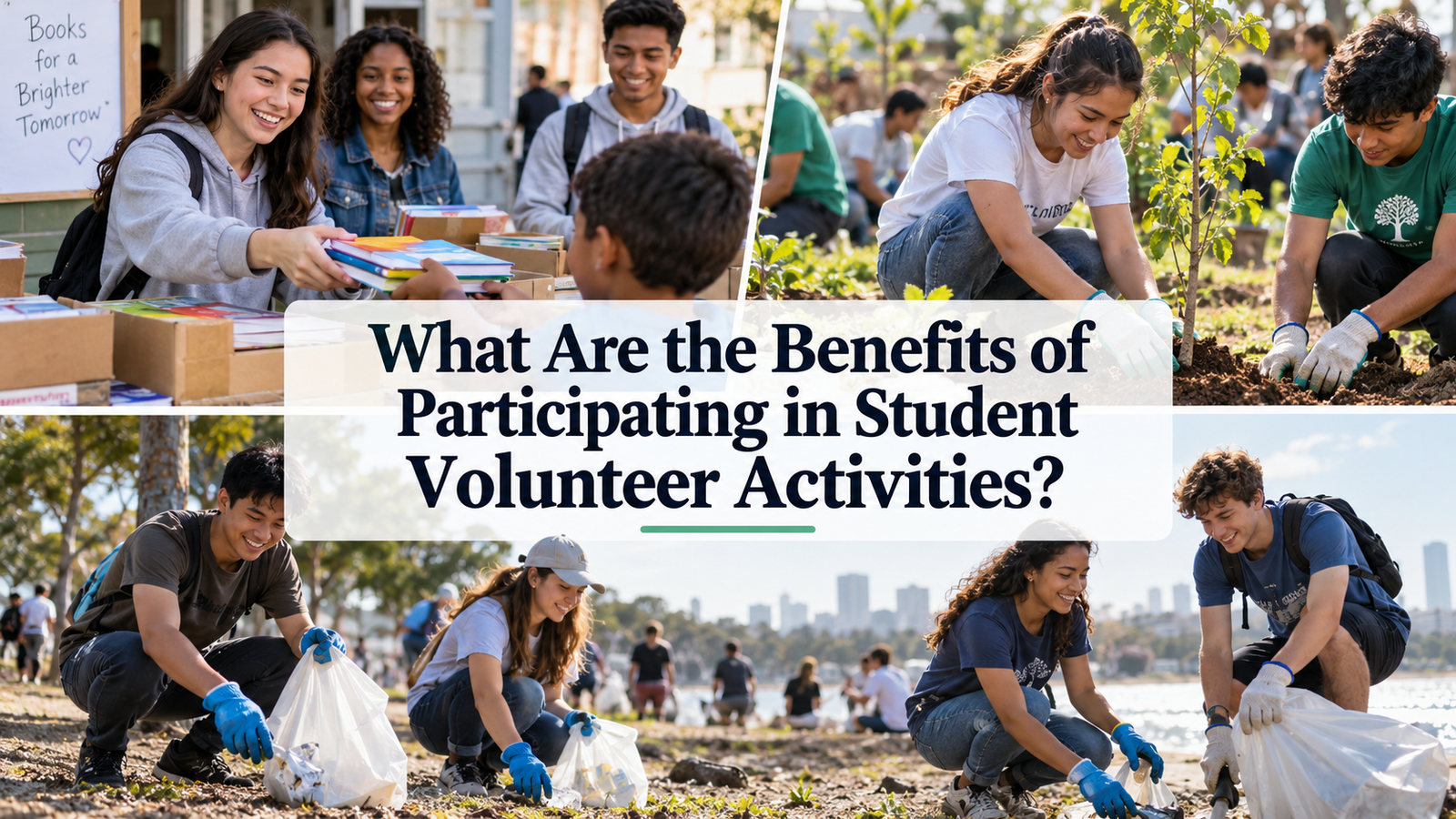
Student volunteer activities include helping at community events, supporting charitable organizations, teaching younger children, planting trees, cleaning public places, and assisting people who need help. These activities encourage students to become responsible, caring, and active members of society.
The benefits of participating in student volunteer activities go beyond helping others. Volunteering can improve communication skills, build confidence, develop leadership qualities, and support personal growth. It can also help students discover their interests and prepare for future educational and career opportunities.
Understanding these benefits can encourage more students to take part in meaningful volunteer work during their school and college years.
1. Volunteering Helps Students Develop Personal Responsibility
One of the most important benefits of student volunteer activities is the development of personal responsibility. When students participate in volunteer programs, they often receive tasks that must be completed within a specific time.
For example, a student helping to organize a school charity event may be responsible for arranging materials, welcoming visitors, or managing donations. Completing these responsibilities teaches the importance of commitment and reliability.
Students begin to understand that their actions can affect other people. They learn to arrive on time, follow instructions, and finish assigned work properly.
These habits are useful in academic life and future employment. A responsible student is often better prepared to handle assignments, group projects, and other important duties.
2. Volunteer Activities Improve Communication Skills
Effective communication is an essential skill for students. However, many students feel uncomfortable speaking with unfamiliar people or expressing their ideas in public.
Participating in student volunteer activities provides opportunities to practice communication in natural situations.
Students may need to explain instructions, answer questions, work with organizers, or communicate with community members. These experiences help them become more comfortable speaking clearly and respectfully.
For example, students volunteering at a community awareness program may explain the importance of cleanliness or environmental protection to visitors.
Regular interaction with different people can improve listening skills and teach students how to adjust their communication according to the situation.
Over time, these experiences may increase confidence during classroom presentations, interviews, and group discussions.
3. Volunteering Builds Confidence and Self Esteem
Many students underestimate their abilities because they have limited experience outside the classroom. Volunteer activities allow them to discover what they can achieve through practical work.
When students successfully complete a meaningful task, they often feel proud of their contribution.
A student who helps organize a donation campaign may initially feel nervous about approaching people. After communicating with several participants and helping the campaign succeed, the student may become more confident.
Such experiences encourage students to believe in their abilities and accept new challenges.
Confidence developed through volunteering can also influence academic performance. Students may feel more willing to ask questions, participate in discussions, and attempt unfamiliar tasks.
Volunteering teaches an important lesson: personal growth often begins when people try something new.
4. Students Learn the Importance of Teamwork
Teamwork is necessary in education, professional life, and community development. Student volunteer activities provide a practical environment for learning how to cooperate with others.
Most volunteer programs require participants to work together toward a shared goal.
For example, students organizing a school cleanliness campaign may divide responsibilities among different groups. Some students collect waste, others arrange cleaning supplies, and another group spreads awareness about proper waste disposal.
Successful completion depends on cooperation and communication.
Through these experiences, students learn how to respect different opinions, share responsibilities, and support their teammates.
They also understand that teamwork does not mean everyone must have the same ideas. Instead, it involves combining different abilities to achieve a common purpose.
These lessons can improve performance in classroom group assignments and future workplaces.
5. Volunteer Work Develops Leadership Qualities
Leadership is not limited to holding an official position. It also involves taking initiative, solving problems, helping others, and making responsible decisions.
Volunteer activities provide students with opportunities to practice these qualities.
A student may lead a small team during a tree planting campaign or coordinate volunteers at a school event.
These responsibilities require planning, communication, and decision making.
Students also learn that good leaders listen to others and consider different suggestions before taking action.
Volunteering helps students understand the difference between giving instructions and providing guidance.
Leadership experience gained during student life can become valuable when applying for college societies, internships, and professional opportunities.
6. Participating in Volunteer Activities Encourages Empathy
Empathy means understanding and respecting the feelings and experiences of other people.
Students often spend most of their time with classmates who have similar routines and educational opportunities. Volunteer work can introduce them to people from different backgrounds and circumstances.
For example, students who participate in educational support programs may meet children who have limited access to books, school supplies, or learning resources.
These interactions can help students appreciate their own opportunities while understanding the difficulties others face.
Volunteering encourages kindness, patience, and respect.
It also teaches students to avoid judging people without understanding their situations.
Developing empathy is important because it supports healthy relationships and encourages responsible behavior in society.
7. Student Volunteer Activities Improve Time Management
Balancing volunteer work with academic responsibilities requires planning.
Students who participate in volunteering must often manage classes, homework, examinations, family responsibilities, and community activities.
This encourages them to organize their schedules more carefully.
For example, a college student volunteering at a weekend literacy program may need to complete assignments before the volunteer session.
By following a realistic routine, students learn how to prioritize important tasks and avoid unnecessary delays.
These habits may improve their overall productivity.
However, students should choose volunteer commitments that fit comfortably within their academic schedules. Volunteering should support personal development rather than create excessive pressure.
8. Volunteering Provides Practical Learning Experiences
Classroom education provides important theoretical knowledge, but practical experiences help students understand how that knowledge applies to everyday situations.
Student volunteer activities create opportunities for learning through direct involvement.
For example, students studying environmental science can participate in recycling programs or community gardening projects.
Students interested in education can help younger children improve their reading skills.
Those studying business may assist with planning a fundraising event and learn about budgeting, organization, and communication.
These experiences connect academic learning with real situations.
Practical involvement can also help students remember information because they have personally applied it.
Volunteering therefore provides an additional learning opportunity that complements traditional classroom education.
9. Volunteer Activities Can Support Mental Wellbeing
Student life can sometimes feel stressful because of examinations, assignments, and expectations about academic performance.
Meaningful volunteer work may provide a refreshing change from regular study routines.
Helping others can create feelings of satisfaction, connection, and purpose.
For example, a student who spends a few hours helping at a community library may enjoy interacting with others and contributing to something useful.
Volunteer activities can also provide opportunities to make friends and develop supportive relationships.
Although volunteering is not a replacement for professional mental health support when needed, positive social involvement can contribute to emotional wellbeing.
Students should choose activities they enjoy and maintain a healthy balance between volunteering, studying, rest, and personal time.
10. Volunteering Helps Students Explore Career Interests
Many students find it difficult to decide which career they want to pursue.
Volunteer activities allow them to explore different fields before making important educational or professional decisions.
A student interested in healthcare might volunteer in an approved hospital support program, performing appropriate nonmedical tasks under supervision.
Someone interested in teaching may help children with reading or homework.
Students considering environmental careers may join conservation projects.
These experiences provide a better understanding of daily responsibilities in different fields.
Volunteering can also help students discover personal strengths and preferences.
A student may realize that they enjoy organizing events, communicating with people, solving practical problems, or working with children.
Such discoveries can support more informed career decisions.
11. Volunteer Experience Can Strengthen College and Job Applications
Academic qualifications are important, but educational institutions and employers may also value practical experience and community involvement.
Student volunteer activities can demonstrate qualities such as responsibility, initiative, teamwork, and commitment.
For example, a student who regularly participates in literacy programs can describe the skills developed through teaching assistance and community interaction.
Instead of simply stating that they have good communication skills, students can provide real examples from their volunteer experience.
This may make personal statements, scholarship applications, and job interviews more meaningful.
However, students should focus on genuine contributions rather than collecting volunteer certificates.
The quality of participation and the lessons learned are often more valuable than the number of activities completed.
12. Volunteering Helps Students Build Social Connections
Another important benefit of participating in student volunteer activities is the opportunity to meet new people.
Volunteer programs often bring together students, teachers, community organizers, and professionals who share an interest in helping others.
Working toward a common goal can create friendships based on cooperation and mutual respect.
For example, students from different colleges may develop lasting connections while organizing a community book donation campaign.
These relationships can expose students to different ideas, experiences, and perspectives.
Social connections developed through volunteering may also provide opportunities for future collaboration, mentorship, and professional learning.
More importantly, volunteering helps students feel connected to the communities around them.
13. Students Become More Aware of Community Problems
Students may not fully understand the challenges facing their communities until they become directly involved in local activities.
Volunteering helps them recognize issues such as environmental pollution, limited educational resources, food insecurity, and inadequate public facilities.
For example, participating in a neighborhood cleanup campaign may help students understand how improper waste disposal affects public spaces.
Helping with a school supplies donation program may reveal the difficulties some families face in meeting educational expenses.
This awareness encourages students to think about practical solutions instead of ignoring community problems.
It also helps them understand that positive change often requires cooperation between individuals, organizations, and local institutions.
14. Volunteering Encourages Creativity and Problem Solving
Volunteer activities do not always go exactly as planned.
Sometimes organizers face limited resources, unexpected changes, or difficulties completing tasks.
These situations encourage students to think creatively and find practical solutions.
For example, a student team organizing an educational awareness event may discover that printed materials are too expensive.
Instead of canceling the activity, students might create reusable posters, use school noticeboards, or prepare simple presentations.
Such decisions require flexibility, creativity, and teamwork.
By participating in these experiences, students learn how to respond calmly to challenges and consider alternative approaches.
Problem solving skills developed during volunteering can also help with academic assignments and everyday decisions.
15. Volunteer Activities Promote Good Citizenship
Good citizenship involves respecting others, understanding social responsibilities, and contributing positively to the community.
Student volunteer activities encourage these values through practical action.
When students participate in public improvement programs, they begin to recognize their role in maintaining a healthy and supportive society.
For example, organizing a tree planting activity teaches students about environmental responsibility.
Helping distribute educational materials encourages concern for equal learning opportunities.
Participating in community awareness campaigns demonstrates the importance of cooperation.
These experiences can inspire students to remain socially active even after completing their education.
They learn that responsible citizenship is not limited to following rules. It also involves making constructive contributions to the places where people live.
How Can Students Start Participating in Volunteer Activities?
Students do not need expensive resources or special qualifications to begin volunteering. Many useful activities can be organized through schools, colleges, universities, and recognized community organizations.
Beginners can start by choosing an activity that matches their interests and available time.
For example, students who enjoy reading may support a library program, while those interested in nature may participate in environmental activities.
Before joining, students should understand the organization’s purpose, assigned responsibilities, safety arrangements, and expected time commitment.
Younger students should participate with appropriate permission and adult supervision.
Starting with a small activity is often better than accepting too many responsibilities.
Consistency, sincerity, and willingness to learn can make even simple volunteer work meaningful.
Frequently Asked Questions
Why are student volunteer activities important?
Student volunteer activities are important because they help students develop useful life skills while making positive contributions to society. They encourage responsibility, communication, teamwork, empathy, and practical learning.
Can volunteering improve academic performance?
Volunteering may indirectly support academic performance by developing time management, confidence, organization, and problem solving skills. However, students must balance volunteer commitments with their studies.
What are some examples of volunteer activities for students?
Common examples include tree planting, community cleaning, book donation programs, tutoring younger students, organizing charity events, assisting at libraries, and participating in environmental awareness campaigns.
Is volunteering useful for future careers?
Yes. Volunteer experience can help students explore career interests, develop transferable skills, and provide practical examples of their abilities during interviews and applications.
How much time should students spend volunteering?
The appropriate amount depends on academic responsibilities, age, available time, and personal interests. Students should begin with manageable commitments and increase participation only when they can maintain a healthy balance.
Conclusion
The benefits of participating in student volunteer activities extend far beyond community service. Volunteering provides students with opportunities to develop confidence, communication skills, leadership abilities, empathy, responsibility, and practical knowledge.
It also encourages teamwork, creativity, social awareness, and meaningful relationships. Through volunteer work, students can explore career interests and understand how their personal efforts can make a positive difference.
The most valuable aspect of volunteering is not receiving recognition or certificates. It is learning to contribute with sincerity, respect, and commitment.
Students who participate in meaningful volunteer activities can become more capable learners, responsible citizens, and thoughtful individuals.
Ultimately, student volunteer activities remind us that education becomes more meaningful when knowledge is combined with practical experience, kindness, and service to others.


