
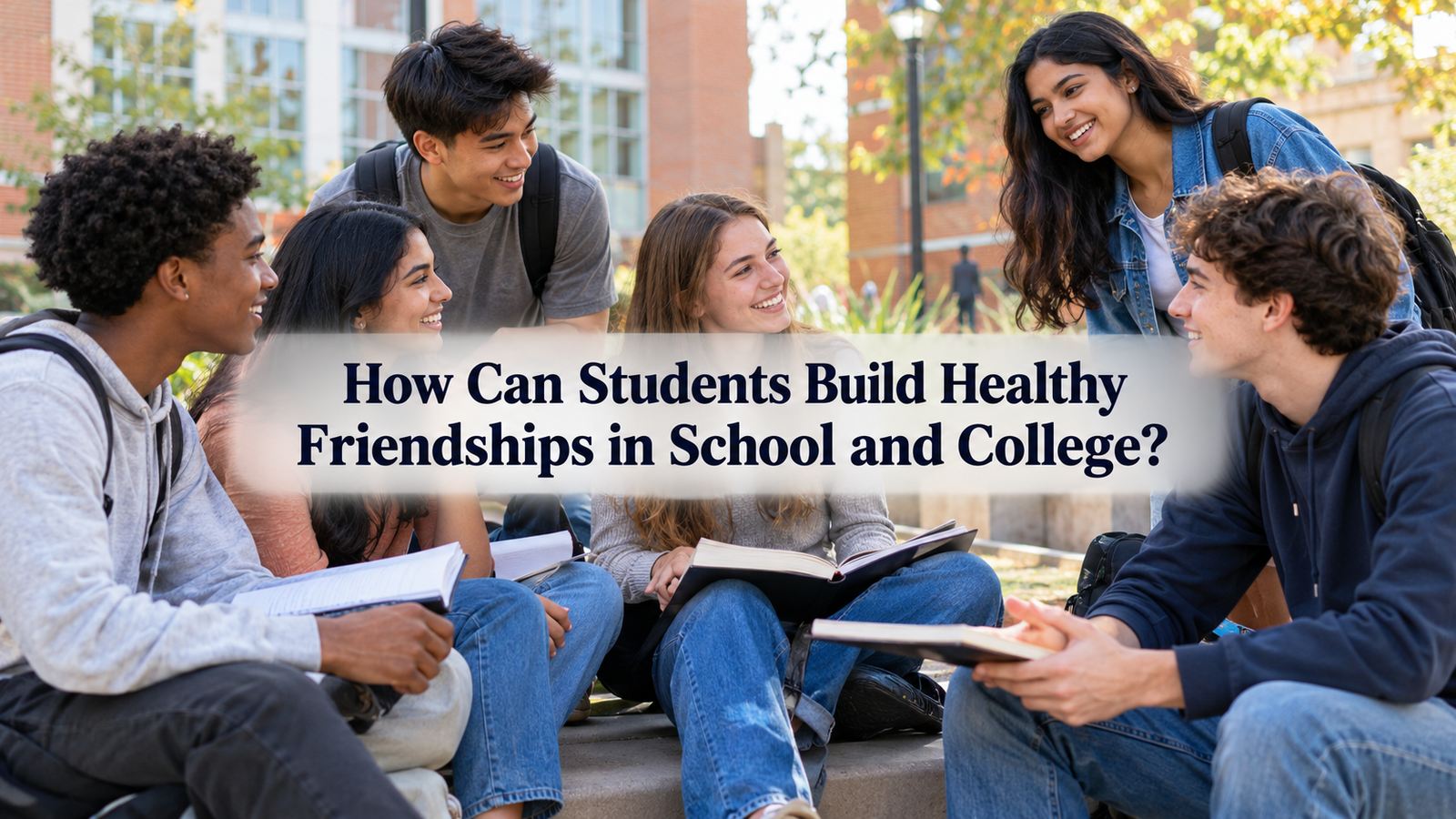
Friendship is an important part of student life. Whether students are studying in school or college, having good friends can make their educational journey more enjoyable and meaningful. Healthy friendships provide emotional support, encourage positive habits, and help students develop important social skills. A good friend can make difficult days easier and turn ordinary moments into beautiful memories.
However, building healthy friendships in school and college requires more than simply spending time together. Students need to understand the importance of honesty, respect, kindness, trust, and communication. They must also learn how to recognize positive relationships and avoid friendships that negatively affect their personal growth.
Students meet people from different backgrounds, cultures, and personalities throughout their academic lives. Learning how to develop meaningful relationships with these individuals can improve both personal confidence and social understanding.
This article explains how students can build healthy friendships in school and college through practical habits, positive communication, mutual respect, and responsible behavior.
Understand the Meaning of Healthy Friendship
Before building friendships, students should understand what makes a relationship healthy.
A healthy friendship is a relationship in which two people respect, support, and understand each other. Both friends feel comfortable sharing their thoughts, expressing their feelings, and discussing their problems without fear of unnecessary judgment.
Healthy friendships are not based on popularity, money, appearance, or academic performance. Instead, they develop through genuine care, trust, and shared experiences.
For example, a student who helps a classmate understand a difficult lesson without expecting anything in return demonstrates the qualities of a supportive friend.
Similarly, a friend who celebrates another student’s success without jealousy shows emotional maturity.
Understanding these qualities helps students choose friendships that contribute positively to their lives.
Start Friendships With Simple Conversations
One of the easiest ways to build healthy friendships in school and college is by starting simple conversations.
Many students feel nervous when meeting new classmates, especially during their first days at a new institution. However, friendships often begin with small interactions.
Students can introduce themselves, ask about classroom activities, discuss assignments, or talk about shared interests.
For example, asking someone about their favorite subject or discussing an upcoming examination can create an opportunity for further conversation.
It is important to speak politely and show genuine interest in the other person’s response.
Students should also remember that friendship develops gradually. A simple greeting today may become a meaningful friendship over time.
Show Respect for Different Personalities
Every student has a unique personality, family background, opinion, and way of thinking.
Some students enjoy talking and participating in group activities, while others prefer quiet environments and smaller social circles.
Healthy friendships require accepting these differences.
Students should avoid making negative comments about someone’s appearance, language, financial situation, or academic abilities.
Respecting personal choices and opinions creates a comfortable environment in which friendships can develop naturally.
For instance, two friends may have different hobbies or career ambitions, but they can still maintain a strong relationship by respecting each other’s interests.
Learning to appreciate differences also prepares students to interact with different types of people in their future professional lives.
Practice Honest and Open Communication
Communication is one of the most important foundations of healthy friendships.
Students should feel comfortable expressing their opinions, discussing concerns, and sharing experiences with their friends.
Honest communication helps prevent unnecessary misunderstandings.
For example, if a student feels uncomfortable with a friend’s behavior, discussing the issue calmly is usually more helpful than remaining silent or becoming angry.
Students should express themselves respectfully without insulting or blaming the other person.
Good communication also involves listening carefully.
When friends share their problems, students should avoid interrupting them or immediately offering criticism.
Sometimes, simply listening with patience can make someone feel understood and supported.
Build Trust Through Consistent Behavior
Trust plays an essential role in maintaining strong friendships.
Students develop trust when they behave honestly, fulfill reasonable promises, and respect private information.
A trustworthy friend does not spread personal stories or use confidential information to embarrass someone.
For example, if a classmate shares a personal concern, keeping that conversation private demonstrates respect.
Students should also avoid making promises they cannot fulfill.
Small actions, such as arriving on time, returning borrowed materials, and offering help when possible, contribute to trust.
Trust generally develops over time through repeated positive experiences.
Once established, it helps friends feel secure and comfortable in their relationships.
Support Friends During Difficult Times
Student life includes academic challenges, personal disappointments, examination pressure, and occasional emotional difficulties.
Healthy friendships become especially valuable during these situations.
Students can support their friends by offering encouragement, listening to their concerns, and helping them find practical solutions.
For example, if a friend performs poorly in an examination, encouraging them to review their mistakes and prepare better can be more helpful than criticizing their results.
Likewise, when someone feels nervous about a classroom presentation, supportive words can increase confidence.
However, students should remember that friendship does not mean solving every problem for another person.
Sometimes, encouraging a friend to speak with a teacher, parent, or counselor is the most responsible form of support.
Choose Friends Who Encourage Positive Habits
The people students spend time with can influence their behavior, motivation, and daily routines.
Therefore, choosing friends who encourage positive habits is important.
Supportive friends may motivate each other to attend classes regularly, complete assignments, participate in educational activities, and develop useful skills.
For example, a group of friends who regularly discuss lessons and prepare for examinations together can create a productive learning environment.
Healthy friendships should also encourage proper rest, personal interests, and enjoyable activities outside the classroom.
Students do not need friends who are perfect in every way.
Instead, they should look for people who respect their goals and encourage responsible decisions.
Learn to Respect Personal Boundaries
Personal boundaries are necessary for maintaining balanced friendships.
Every student needs some personal time, privacy, and independence.
Healthy friends understand that spending time together constantly is neither necessary nor always possible.
For example, a student may need to concentrate on an important assignment instead of attending a social gathering.
A respectful friend should understand this decision without becoming angry or creating unnecessary pressure.
Students should also avoid checking another person’s private messages, demanding personal information, or forcing someone to share things they are uncomfortable discussing.
Respecting boundaries helps friendships remain comfortable and free from unnecessary expectations.
It also teaches students the importance of individual responsibility.
Avoid Gossip and Negative Discussions
Gossip can damage friendships and create misunderstandings among classmates.
Students sometimes discuss other people’s personal matters without considering the possible consequences.
Sharing rumors or making negative comments about someone who is absent can reduce trust within a friendship group.
A healthy friendship should not depend on criticizing other students.
Instead, friends can discuss educational goals, hobbies, interesting experiences, and useful ideas.
If students hear an unverified story about a classmate, they should avoid spreading it.
Choosing respectful conversation helps create a positive social environment in schools and colleges.
It also demonstrates maturity and responsibility.
Participate in Group Activities
School and college activities provide excellent opportunities to develop new friendships.
Students can participate in sports, academic clubs, debates, cultural programs, volunteer activities, and group projects.
These experiences allow students to interact with classmates who share similar interests.
For example, joining a reading club can help students meet others who enjoy books and learning.
Similarly, participating in a sports team encourages cooperation, communication, and mutual support.
Group activities also teach students how to manage disagreements and work toward common goals.
Students who initially find social interaction difficult may discover that shared activities make conversations easier.
Regular participation can gradually strengthen social confidence and help students develop lasting relationships.
Learn How to Handle Disagreements
Disagreements are a normal part of friendship.
Even close friends may have different opinions about academic activities, personal decisions, or everyday situations.
Healthy friendships do not require complete agreement.
Instead, they require the ability to manage differences respectfully.
When disagreements occur, students should remain calm and try to understand the other person’s perspective.
Using insulting language, involving unnecessary outsiders, or discussing private arguments publicly can make situations worse.
For example, if two friends disagree about responsibilities in a group assignment, they should discuss the workload and find a fair solution.
Apologizing when necessary is also an important skill.
Learning to resolve conflicts peacefully helps students maintain stronger friendships.
Celebrate Each Other’s Achievements
A healthy friendship includes happiness for another person’s success.
Students may achieve different results in examinations, competitions, sports, and extracurricular activities.
Instead of comparing achievements negatively, friends should appreciate each other’s efforts.
For example, congratulating a classmate who receives an academic award demonstrates kindness and confidence.
Students can also encourage friends who have not yet achieved their goals.
Friendship should not become a competition in which one person’s success makes another person feel unsuccessful.
Celebrating achievements together creates a positive atmosphere and strengthens emotional connections.
It also encourages students to develop a healthier attitude toward personal progress.
Maintain a Balance Between Friendship and Studies
Friendships are important, but students must also fulfill their academic responsibilities.
Spending excessive time socializing may interfere with homework, examination preparation, or personal development.
Healthy friends understand the importance of maintaining balance.
Students can plan time for conversations, group activities, and social gatherings without neglecting their studies.
For example, friends may arrange a study session before enjoying recreational activities.
They can also remind each other about important deadlines and classroom responsibilities.
A balanced friendship supports educational progress rather than creating unnecessary distractions.
Students should understand that managing time effectively allows them to enjoy both academic success and meaningful relationships.
Recognize Unhealthy Friendship Behaviors
Not every friendship develops in a positive direction.
Some relationships may involve repeated criticism, manipulation, dishonesty, bullying, or disrespect.
Students should learn to recognize these behaviors.
For example, a friend who repeatedly pressures someone to break school rules or abandon personal values may not be encouraging healthy choices.
Similarly, someone who constantly insults another student or uses private information against them is demonstrating harmful behavior.
Students should communicate their concerns and establish clear boundaries when appropriate.
If negative behavior continues, creating distance may be necessary.
When bullying, threats, or serious harassment occur, students should seek assistance from a trusted teacher, parent, counselor, or responsible authority.
Recognizing unhealthy behavior helps students protect their confidence and emotional well being.
Use Social Media Responsibly
Social media plays an important role in modern student friendships.
Messaging applications and online platforms allow school and college friends to communicate, share educational materials, and remain connected.
However, responsible online behavior is essential.
Students should respect privacy, avoid sharing embarrassing photographs without permission, and think carefully before posting comments.
Online misunderstandings can sometimes create problems in real life.
For example, a joke in a group conversation may be interpreted differently by another student.
Communicating respectfully and avoiding harmful content can prevent unnecessary conflicts.
Students should also make time for face to face conversations instead of depending entirely on digital communication.
A healthy friendship benefits from both responsible online contact and meaningful personal interaction.
Be Yourself Instead of Trying to Impress Everyone
Some students change their behavior because they want to become popular or gain acceptance from a particular group.
However, pretending to be someone else can make friendships uncomfortable.
Healthy relationships develop when people appreciate each other for their genuine personalities.
Students should feel confident expressing their interests, values, and opinions respectfully.
They do not need to copy someone else’s clothing, spending habits, or lifestyle to build friendships.
For example, a student who enjoys reading should not feel embarrassed simply because classmates prefer sports or entertainment.
Being genuine attracts people who appreciate similar values and understand personal differences.
Authenticity also helps students develop stronger self confidence.
Give Friendships Time to Grow
Meaningful friendships rarely develop instantly.
They usually grow through regular interaction, shared experiences, and consistent kindness.
Students should avoid expecting every new classmate to become a close friend immediately.
Some relationships remain casual, while others gradually become deeper and more meaningful.
Both types of relationships can be valuable.
Students should allow friendships to develop naturally without forcing unnecessary emotional closeness.
Spending time together, supporting each other, and communicating respectfully helps relationships grow.
Patience is especially important for students who are shy or adjusting to a new school or college.
Even a small circle of trustworthy friends can provide valuable companionship.
Develop Empathy and Kindness
Empathy means understanding and considering another person’s feelings and experiences.
It is an important quality in healthy friendships.
Students can practice empathy by listening carefully, showing concern, and avoiding quick judgments.
For example, if a friend becomes unusually quiet, asking whether everything is fine may demonstrate genuine care.
However, students should also respect the person’s decision if they do not want to discuss their feelings.
Small acts of kindness can make a significant difference.
Sharing useful notes, helping someone understand classroom instructions, or including a new student in a group activity can create positive connections.
Kindness does not always require major actions.
Often, simple and thoughtful behavior helps build the strongest relationships.
Conclusion
Building healthy friendships in school and college is an important part of personal and social development. Good friendships help students feel supported, develop confidence, improve communication skills, and enjoy their educational experiences.
Healthy relationships require honesty, trust, kindness, respect, patience, and mutual understanding. Students should choose friends who encourage positive behavior, respect personal boundaries, and support their academic and personal goals.
It is equally important to recognize unhealthy relationships, manage disagreements calmly, and maintain a balance between friendships and educational responsibilities.
Students should remember that having many friends is not as important as having genuine and trustworthy relationships.
A few supportive friends who respect individual differences and encourage personal growth can make school and college life more meaningful.
By practicing positive social habits and treating others with kindness, students can develop healthy friendships that may continue long after their academic years have ended.


