
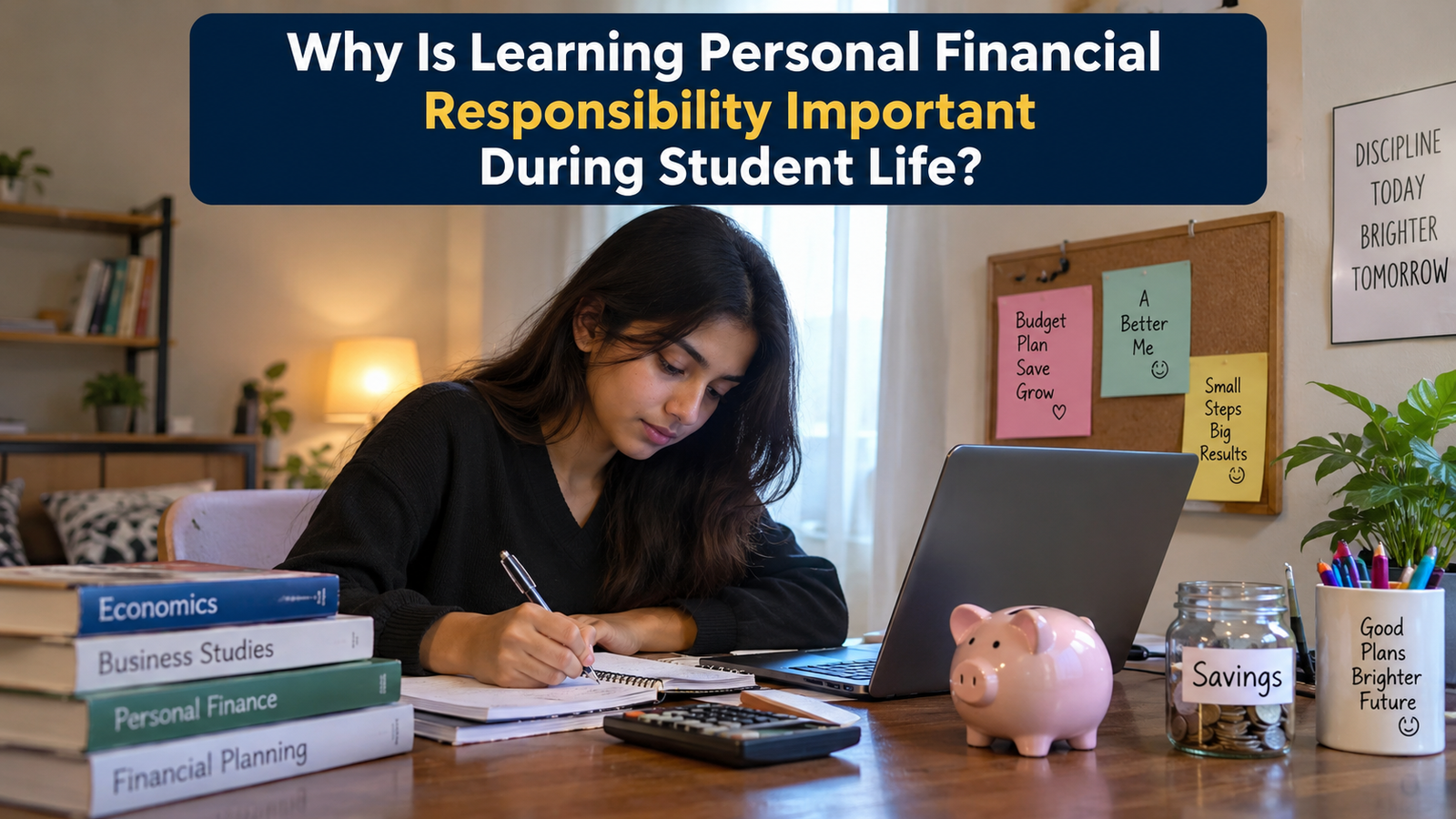
Managing money is an important life skill that students should begin learning before entering professional life. During school and college years, students develop habits that often remain with them for many years. While academic education helps students gain knowledge and prepare for careers, personal financial responsibility teaches them how to use money wisely, control unnecessary expenses, and prepare for future financial needs.
Many students depend on their parents or guardians for daily expenses. Some receive monthly allowances, while others earn money through part time work or small personal activities. Regardless of where their money comes from, understanding how to manage it is essential.
Learning personal financial responsibility during student life does not mean avoiding every enjoyable activity or saving every amount of money. Instead, it means understanding the value of money, making thoughtful spending decisions, and developing financial habits that support long term stability.
Students who practice responsible money management become more confident in handling everyday expenses. They also develop patience, independence, and better decision making skills.
What Is Personal Financial Responsibility for Students?
Personal financial responsibility refers to the ability to manage money carefully and make sensible financial decisions. It includes understanding income, planning expenses, saving regularly, and avoiding unnecessary borrowing.
For students, financial responsibility usually begins with small activities such as managing pocket money, purchasing educational supplies, or planning transportation expenses.
For example, a student receiving a monthly allowance can divide that money into different categories, including school supplies, transportation, food, and savings.
Instead of spending the entire allowance immediately, the student learns to plan according to actual needs.
These simple habits create a strong foundation for more complicated financial decisions later in life.
Financial responsibility also teaches students that money is a limited resource. Every spending decision affects how much remains available for other purposes.
1. Helps Students Understand the Real Value of Money
One of the greatest benefits of learning financial responsibility is understanding the true value of money.
Young students sometimes view money only as something used to purchase products or enjoy activities. However, earning money usually requires time, effort, planning, and dedication.
When students understand how money is earned, they become more careful about spending it.
For example, a student who saves pocket money for several weeks to purchase a useful book may appreciate that book more than someone who buys it without considering the cost.
This experience teaches students that financial resources should be respected.
Understanding the value of money also encourages students to appreciate the financial support provided by their families.
Rather than demanding unnecessary purchases, they begin considering whether an item is genuinely needed.
2. Develops Better Budgeting Skills
Budgeting is one of the most important personal finance skills for students.
A budget is a simple plan that explains how money will be received, spent, and saved during a particular period.
Students can create a weekly or monthly budget based on their available allowance or income.
For example, a student receiving Rs. 5,000 per month might prepare the following budget.
| Expense Category | Monthly Amount |
|---|---|
| Transportation | Rs. 1,500 |
| Food and refreshments | Rs. 1,000 |
| Educational supplies | Rs. 800 |
| Personal expenses | Rs. 700 |
| Savings | Rs. 1,000 |
| Total | Rs. 5,000 |
This simple budget helps students understand where their money goes.
It also reduces the possibility of running out of money before the end of the month.
Students do not need advanced financial knowledge to begin budgeting. A notebook, spreadsheet, or basic budgeting application can help them record expenses.
With regular practice, budgeting becomes a natural habit.
3. Encourages the Habit of Saving Money
Saving money is another essential part of personal financial responsibility during student life.
Students may believe they need a large income before they can start saving. In reality, saving small amounts regularly can help build discipline.
For example, saving Rs. 200 every week produces Rs. 10,400 over 52 weeks.
Although the amount may appear small, it can help purchase educational materials, cover unexpected expenses, or contribute toward a personal goal.
More importantly, regular saving teaches students to think about future needs instead of focusing only on immediate satisfaction.
Students can begin by setting realistic savings goals.
A student might save money for a calculator, educational course, examination fee, or laptop.
Having a specific goal makes saving more meaningful and encourages consistent effort.
4. Teaches Students to Differentiate Between Needs and Wants
Understanding the difference between needs and wants is a major step toward responsible money management.
Needs are essential expenses that support daily life, education, and personal well being.
These may include transportation, necessary textbooks, meals, and educational supplies.
Wants are purchases that provide enjoyment or convenience but are not always necessary.
Examples include expensive accessories, frequent restaurant meals, and replacing a working phone simply because a newer model is available.
There is nothing wrong with spending money on enjoyable activities when the budget allows.
However, students should learn to prioritize essential needs before optional purchases.
For instance, purchasing examination preparation materials may be more important than buying an expensive fashion accessory.
Recognizing these differences helps students make better financial decisions.
5. Reduces Financial Stress During Student Life
Financial problems can create unnecessary stress for students.
A student who spends an entire monthly allowance within the first week may struggle to manage transportation, meals, or educational expenses during the remaining days.
This situation can lead to worry and repeated requests for additional financial support.
Responsible financial planning can reduce some of these difficulties.
When students understand their available resources and monitor spending, they are better prepared to handle regular expenses.
They also feel more confident because they know how much money remains available.
Although budgeting cannot eliminate every financial challenge, it can help students avoid problems caused by unplanned spending.
Financial awareness allows students to concentrate more effectively on their studies and personal development.
6. Builds Independence and Personal Confidence
Learning to manage money encourages students to become more independent.
During early school years, parents usually make most financial decisions. As students grow older, they gradually become responsible for managing certain expenses.
Handling these responsibilities provides valuable practical experience.
For example, a college student who manages transportation costs, mobile expenses, and educational materials learns how to make decisions without depending on others for every small purchase.
This independence builds confidence.
Students begin trusting their ability to evaluate different options and choose what fits their financial situation.
Financial independence does not necessarily mean earning enough money to support oneself completely.
It can begin with managing a small allowance responsibly.
7. Helps Students Avoid Unnecessary Debt
Borrowing money without careful planning can create financial difficulties.
Students may sometimes borrow from friends, use installment plans, or make purchases through digital payment services without fully understanding repayment responsibilities.
Although borrowing can be necessary in certain situations, unnecessary debt should be avoided.
For example, purchasing an expensive electronic device through installments may create pressure if the student does not have a reliable source of income.
Learning financial responsibility encourages students to examine their ability to repay borrowed money.
They begin understanding that borrowed funds are not additional income.
Students should also learn about interest charges, repayment deadlines, and possible penalties before accepting financial agreements.
Developing this awareness early can help prevent serious financial problems in adulthood.
8. Improves Decision Making and Self Discipline
Personal financial responsibility is closely connected with self discipline.
Students encounter many opportunities to spend money, particularly through online shopping, social media advertisements, and entertainment platforms.
These influences can encourage impulsive purchases.
A financially responsible student learns to consider whether a purchase is necessary, affordable, and useful.
For example, before buying an expensive pair of shoes, a student might wait several days and compare alternatives.
After thinking carefully, the student may discover that the purchase is unnecessary.
This habit strengthens decision making skills.
It also encourages patience and reduces the tendency to seek immediate satisfaction.
The ability to control spending can positively influence other areas of student life, including time management and academic discipline.
9. Prepares Students for Future Financial Responsibilities
Student life is an excellent time to prepare for adult financial responsibilities.
After completing education, individuals may need to manage salaries, household expenses, rent, utility bills, transportation costs, and family obligations.
Without basic financial knowledge, these responsibilities can feel overwhelming.
Students who understand budgeting, saving, and responsible spending are better prepared for such situations.
For example, a student who regularly manages a monthly allowance already understands the importance of dividing money among different priorities.
Later, the same principle can be applied to managing a professional salary.
Although adult financial responsibilities are more complicated, the foundation remains similar.
Early financial education helps make the transition from student life to professional life smoother.
10. Encourages Responsible Use of Digital Payments
Digital banking and online payment systems have made financial transactions more convenient.
Students can purchase products, pay educational fees, and transfer money using mobile applications and digital wallets.
However, convenience can sometimes make spending money feel easier than handing over physical cash.
Students should understand that digital transactions involve real money and require the same level of responsibility.
They should regularly review their transaction history, avoid unnecessary subscriptions, and monitor online purchases.
Financial responsibility also includes protecting personal banking information.
Students should never share passwords, verification codes, or other sensitive financial details with unknown individuals.
Learning safe digital payment practices helps students protect their money while benefiting from modern financial technology.
11. Helps Students Set Realistic Financial Goals
Setting financial goals gives students a clear reason to manage money carefully.
Without specific goals, saving may feel unnecessary or difficult.
However, when students understand what they want to achieve, financial planning becomes more purposeful.
A student may want to purchase a laptop, attend an educational workshop, or contribute toward university expenses.
The next step is to estimate the required amount and create a realistic savings plan.
For example, a student planning to purchase a Rs. 24,000 device within twelve months would need to save Rs. 2,000 each month.
This calculation helps the student determine whether the goal is achievable.
Financial goals also teach students the importance of planning, consistency, and patience.
Even when progress is slow, regular effort can bring meaningful results.
12. Encourages Thoughtful Consumer Habits
Students are constantly exposed to advertisements, promotional offers, and recommendations from friends.
These influences can make certain products appear more necessary than they actually are.
Learning personal financial responsibility encourages students to become thoughtful consumers.
Instead of purchasing a product simply because it is popular, students learn to compare prices, evaluate quality, and consider long term usefulness.
For example, purchasing a durable school bag may provide better value than repeatedly buying cheaper bags that wear out quickly.
Students should also understand that discounts do not automatically make purchases financially sensible.
An unnecessary product remains an unnecessary expense even when offered at a reduced price.
Responsible consumer habits help students get better value from their available money.
13. Strengthens Family Communication About Money
Financial responsibility can also improve communication between students and their families.
Many parents work hard to provide educational opportunities and meet household expenses.
When students understand financial limitations, they become more considerate about requesting additional money.
They may also feel more comfortable discussing educational expenses and planning future purchases with their parents.
For example, a student who needs a new computer for academic work can discuss the available budget and compare suitable options with family members.
Such discussions encourage transparency and shared understanding.
They also help students learn practical financial lessons from the experiences of older family members.
Respectful communication about money is an important part of developing maturity.
14. Supports Better Academic Planning
Good financial management can indirectly support academic success.
Students often need money for textbooks, stationery, internet access, transportation, and examination fees.
When these expenses are planned in advance, students may face fewer financial interruptions during important academic periods.
For example, setting aside money for examination registration can prevent last minute difficulties.
Similarly, planning educational purchases allows students to obtain necessary resources without unnecessary pressure.
Financial planning also encourages students to consider the value of educational investments.
They become more thoughtful when selecting courses, learning materials, and extracurricular activities.
The objective is not always to choose the cheapest option but to select resources that offer genuine educational benefits.
15. Creates a Foundation for Long Term Financial Stability
The financial habits developed during student life can influence future financial behavior.
Students who practice saving, budgeting, and careful spending may find it easier to maintain these habits after entering professional life.
Over time, they can build a stronger understanding of emergency savings, financial security, and long term planning.
They may also become more interested in learning about banking, insurance, investments, and retirement planning when those topics become relevant.
However, responsible financial behavior does not guarantee wealth or eliminate financial difficulties.
Income, family circumstances, and unexpected expenses also affect financial stability.
Even so, learning how to make informed decisions can help individuals use their available resources more effectively.
Practical Ways Students Can Develop Financial Responsibility
Developing good financial habits does not require complicated methods.
Students can begin with simple activities that fit their age, income, and daily responsibilities.
Create a monthly budget: Record available money and divide it among essential expenses, personal spending, and savings.
Track daily expenses: Write down purchases to understand where money is being spent.
Save a small amount regularly: Build consistency by saving an affordable portion of pocket money or earnings.
Avoid impulsive shopping: Consider whether a purchase is necessary before spending.
Compare prices: Explore different options before purchasing books, accessories, or educational materials.
Set financial goals: Choose realistic targets and develop a plan to achieve them.
Learn basic financial concepts: Read reliable educational resources about budgeting, banking, saving, and responsible borrowing.
Review financial progress: Examine spending habits at the end of each month and identify opportunities for improvement.
These practical steps can gradually improve financial awareness.
Students should remember that developing financial responsibility is a learning process. Occasional mistakes can become useful lessons when followed by reflection and better decisions.
Common Financial Mistakes Students Should Avoid
Many students experience financial difficulties because they have not yet developed effective money management habits.
One common mistake is spending money without maintaining any record. Small purchases can gradually consume a significant portion of a monthly allowance.
Another mistake is comparing personal spending with friends.
Students may feel pressure to purchase expensive products or participate in activities that exceed their budgets.
Ignoring savings is another problem. Students who spend everything immediately may struggle when unexpected expenses arise.
Some students also make online purchases without checking their available balance.
Avoiding these mistakes requires awareness, patience, and regular financial planning.
Students should focus on their own circumstances rather than attempting to match the spending habits of others.
Conclusion
Learning personal financial responsibility during student life is an important step toward becoming a confident and independent adult. It helps students understand the value of money, develop budgeting skills, establish saving habits, and make informed spending decisions.
Financial responsibility also encourages discipline, reduces avoidable financial stress, and prepares students for the challenges of professional and family life.
The most valuable lesson is that responsible money management does not depend entirely on how much money a person has. It depends on understanding available resources and making thoughtful choices.
Students who begin practicing good financial habits early can develop greater control over their expenses and prepare more effectively for future responsibilities.
Personal financial responsibility is not simply about saving money. It is about developing the knowledge, patience, and judgment needed to build a more secure and balanced future.


